
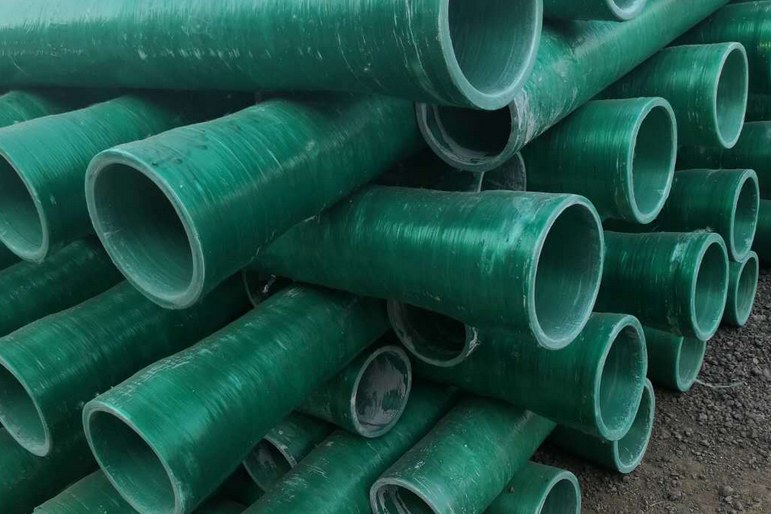
Buried power and communication cables fail in three ways: they are cut by excavation, crushed by ground movement and traffic, or they corrode and short where the soil is aggressive. The conduit you choose decides how many of those three risks you are buying protection against — and PVC, steel and FRP cover very different combinations of them.
This guide compares FRP (fiberglass) conduit, PVC conduit and steel conduit for underground cable protection, across mechanical strength, corrosion, electrical behaviour, installation and lifetime cost.
1. What Underground Conduit Must Do
- Carry the cable without abrading it during pull-in (smooth bore, no sharp edges).
- Withstand soil load, traffic and accidental dig-in to the depth specified.
- Survive the soil chemistry — for decades, because it cannot be inspected.
- Not interfere with the cable electrically (heating, induced currents, bonding).
2. The Three Materials at a Glance
| Property | PVC conduit | Steel (galvanized) conduit | FRP conduit |
|---|---|---|---|
| Crush / impact strength | Low — deforms under load | High | High (composite wall) |
| Corrosion in soil | Good (inert) | Poor — zinc and steel corrode in acid/salt soils | Excellent in acid, salt and chemical soils |
| Electrical behaviour | Non-conductive | Conductive — eddy losses and bonding needed | Non-conductive — no induced heating |
| Rodents / termites | Can be gnawed | Immune | Hard surface, immune |
| Weight and handling | Light | Heavy | Light (1/4 of steel) |
3. Mechanical Strength: Load, Traffic and Dig-In
Conduit under roads and rail crossings must carry the live load plus impact. FRP conduit resists crushing through a relatively stiff composite wall, and it does not deform permanently under overload the way PVC does — a PVC duct flattened by a settling fill is a permanent cable trap. For shallow cover and heavy traffic, specify FRP with a crush rating matched to the depth; for very deep, well-bedded runs, the strength gap matters less.
4. The Electrical Case for FRP
This is the point where steel is not just inconvenient but wrong for some cable types:
- Single-core AC power cables in steel conduit generate induced circulating currents and eddy heating in the steel wall, derating the cable and wasting energy. Non-magnetic, non-conductive FRP eliminates the problem entirely.
- No bonding or earthing of the conduit run is needed with FRP, simplifying installation and inspection.
- FRP conduit supports its own weight on racks and in vertical risers without the sagging of PVC at elevated temperature.
5. Corrosion and Soil Chemistry
PVC is chemically inert but soft; steel corrodes where the galvanizing is damaged — at cut ends, scratches and threads — and acid or salt soils then attack the base metal. FRP combines PVC's immunity with structural strength: there is no coating to scratch off, because corrosion resistance runs through the whole laminate. In coastal fills, acid sulphate soils, chemical plant yards and landfill edges, that is the deciding factor.
6. Installation and Pulling
- Couplings: FRP conduit uses mechanical or solvent-weld couplings; check that the joint maintains the bore and does not snag the cable.
- Bends and pull-in: keep bend radii generous and the cable fill ratio below the recommended maximum (typically 40 % for straight pulls, less with bends).
- Duct banks: FRP's light weight speeds multi-duct concrete-encased banks; spacer systems keep ducts aligned during the pour.
7. When Each Material Wins
- PVC: the low-cost default for domestic and light commercial routes with adequate depth and benign soil.
- Steel: where extreme point impact or fire rating for steel construction is required, and DC circuits where the conduit is not the return path.
- FRP: high-load crossings, single-core AC circuits, aggressive or coastal soils, chemical plants, and anywhere a non-conductive, corrosion-proof, high-strength duct is worth more than the PVC price difference.
8. Specification Checklist
| Parameter | Example entry |
|---|---|
| Size and wall class | DN 110, heavy-duty crush class, 6 m lengths |
| Cover depth and loading | 0.8 m under road with traffic loading |
| Cable type | Single-core 33 kV — non-magnetic conduit required |
| Soil condition | Coastal sand fill, high chloride |
| Testing | Crush test report, impact test, coupler pull test |
9. Specification Mistakes to Avoid
- Running single-core AC cables in steel conduit without a magnetic analysis — the heating derate surprises everyone.
- Buying PVC crush strength for a road crossing at minimum depth.
- Damaging galvanizing on cut steel ends in corrosive soil and burying the problem.
- Choosing conduit by price per metre instead of installed cost and lifetime.
See our FRP cable protection pipes for crush-tested, non-conductive ducting, the FRP cable trenches for above-ground routing, and the older cable tray selection guide for tray systems.
Need help selecting FRP products?
Our engineers answer technical questions free of charge.
Ask an Engineer on WhatsApp