
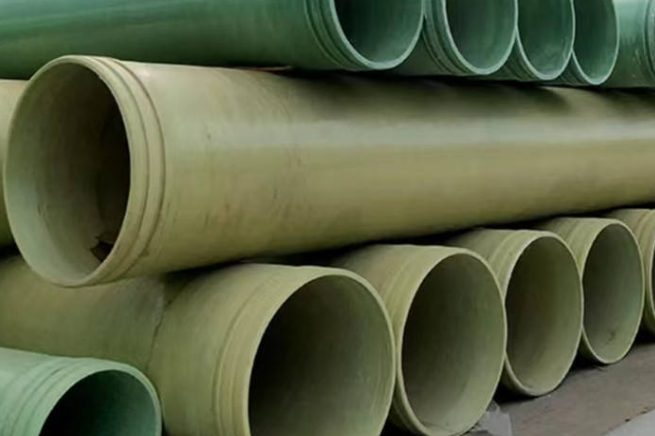
China is the world's largest producer of FRP/GRP products — from filament-wound pipe and 5,000 m³ tanks to pultruded profiles and molded gratings — which is why procurement teams and contractors everywhere source them here. The price advantage is real. But FRP is an engineered material: the difference between a good shipment and a failed project is written in the specifications, the factory's quality discipline and the way you verify both.
This guide walks through the full import path — specification, supplier selection, MOQ and payment, HS codes and duties, inspection, and shipping — so your first (or next) FRP order from China goes smoothly.
1. Nail Down the Specification Before You Contact Anyone
A vague inquiry ("need FRP tank, send price") gets you a quote for a different product than you think. FRP quotes depend on choices that are invisible in a one-line email. Have this ready:
- Medium & concentration — e.g. 30% sulfuric acid, 20 °C; this drives the resin choice (ortho/isophthalic/vinyl ester/phenolic)
- Temperature — continuous and peak; every resin has a ceiling (~80–110 °C for vinyl ester systems)
- Dimensions & volume — diameter, height/straight length, capacity, wall thickness requirement
- Design standard — BS 4994, ASME RTP-1, AWWA C950, ASTM families, or a local code
- Fittings & accessories — nozzles, manways, flanges, supports, internals, grounding
- Service conditions — buried or above-ground, UV exposure, seismic/wind loading, pressure
The clearer your RFQ, the faster (and cheaper) the quotation — and the lower the risk of a mid-project change order.
2. Factory vs Trader: How to Tell
Many "manufacturers" you meet online are trading companies. That is not automatically bad — some traders add real value — but you should know which one you are dealing with before money moves.
| Check | Real Factory | Trader |
|---|---|---|
| Video call from workshop | Happy to walk you through winding/molding lines live | Usually hesitant or "shows office" |
| Product photos | Same-branded workshop, batch numbers, QC paperwork in frame | Stock photos reused across sites |
| Certificates | ISO 9001 in their name; test reports with their letterhead | Generic third-party certificates |
| Ask a technical question | Engineers answer specifics (resin, standard, test method) | "Let me ask the factory" or vague |
| Overseas shipments | Own export history, custom packing lists | Often re-invoices from the real maker |
If you are buying critical corrosion equipment, prefer a real factory — or insist on a third-party inspection of the actual production site before payment of the balance.
3. MOQ, Pricing Terms and Payment
Typical MOQ patterns
- Standard catalog products (molded gratings, profiles, sheets): often modest MOQs or none for stocked sizes.
- Custom tanks & pressure pipe: normally quotation-based per project; many factories accept a single unit or one container because tooling/molds already exist for standard diameters.
- Fully custom molds: expect a one-time tooling charge amortized over the order.
Ask the factory to break out: product price, mold/tooling (if any), and freight — separately. This makes comparison honest.
Trade terms and payment
- Common terms: FOB (Chinese port), CFR/CIF (your port), DDP (delivered, customs cleared) — DDP shifts more risk to the seller and is worth comparing.
- Payment: 30% TT deposit + 70% before shipment is standard; L/C at sight for larger contracts; escrow-style platforms for first orders.
- Never pay 100% in advance to an unverified supplier.
4. HS Codes and Duties: Plan, Then Confirm
FRP products are generally classified under Chapter 39 (plastics and articles thereof). Depending on the exact construction, common headings you or your broker may see include:
- Pipes, tubes and hoses — Chapter 3917 (plastic tubes/pipe); some reinforced pipe is classified elsewhere depending on construction
- Plates, sheets and panels — 3920 / 3921
- Structural profiles, rods, angles — 3916 / 3926
- Other articles (gratings, tanks sections, fittings) — often 3925 / 3926
⚠️ Classification is decided by the actual product construction and by your destination country's customs authority — and duty rates differ accordingly. Always send the technical datasheet and drawings to a licensed customs broker for a ruling before you finalize the contract.
5. Quality Verification: Tests That Matter
Do not rely on a glossy catalog. Agree in advance which documents and tests accompany the shipment:
- Material certificates — resin brand and type, glass content by burn-off test.
- Mechanical test reports — tensile/flexural per ASTM D638/D790 on process-control coupons.
- Hydrostatic / spark test — pressure pipe and tanks: ask for batch or 100% test certificates.
- Barcol hardness & cure check — confirms the laminate is fully cured, not just surface-dry.
- Third-party inspection — SGS/BV/TÜV pre-shipment inspection or witness testing for critical orders.
- Photos/video — dimensions, wall thickness measurements, packing condition before container loading.
6. Packing and Shipping Realities
- Large tanks may ship knocked-down or stack nested only if the design allows — never improvise; transport stresses are real and unqualified stacking can crack flanges.
- Pipe: bundles with proper blocking; watch that heavy bundles don't crush lower layers during sea transit.
- Gratings/profiles: palletized and strapped, with edge protection; add export-grade wrapping for open-deck routes.
- Typical lead times: catalog products 1–3 weeks; custom tanks 3–8 weeks depending on size and schedule; sea freight from China to most world ports 3–6 weeks. Always confirm the current schedule — it shifts with container availability.
7. Ten-Point Pre-Order Checklist
- Medium, concentration, temperature, pressure documented in the RFQ
- Design standard agreed and cited in the PI
- Resin system named (not just "FRP")
- Wall thickness / glass content specified or test targets set
- Factory verified — video call, license, export history
- Payment terms balanced (deposit + balance against documents)
- HS code pre-checked with your broker
- Test and inspection scope written into the contract
- Packing and loading plan confirmed in writing
- Lead time, Incoterm and penalty clauses clear
See our full FRP catalog, read about the factory, or jump to contact.
Need help selecting FRP products?
Our engineers answer technical questions free of charge.
Ask an Engineer on WhatsApp