
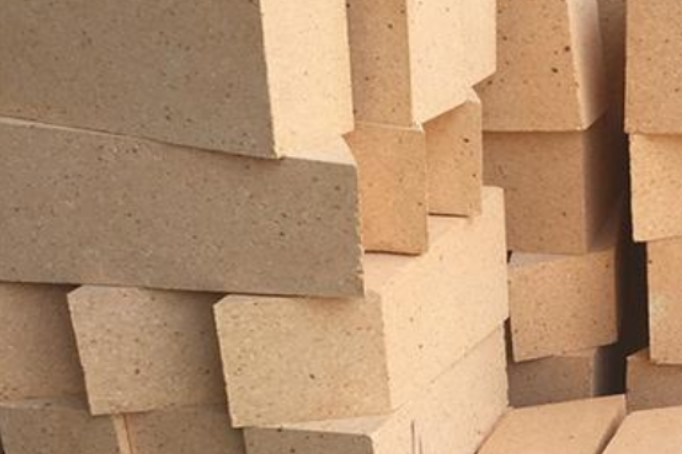
Every furnace, kiln, ladle and hot-gas line eventually asks the same question: which refractory should we line it with? Choose correctly and the lining outlasts the campaign; choose on price alone and you may reline in months. The answer depends on operating temperature, thermal shock, slag or gas chemistry, mechanical abuse and whether heat loss matters more than first cost.
This guide explains the three refractory families we manufacture and export — high-alumina shaped bricks, ceramic fiber blankets/boards, and castables/fireclay materials — and when each one is the right call.
1. The Three Families at a Glance
| Family | Typical form | Practical temperature range | Primary job |
|---|---|---|---|
| High-alumina bricks | Shaped, fired bricks and shapes | ~1,300–1,770 °C depending on Al₂O₃ grade | Direct contact with molten metal, hot slag, high load-bearing walls |
| Ceramic fiber | Blanket, board, module, rope | ~1,050–1,430 °C by grade (1260 °C is the common workhorse) | Insulation behind hot-face brick; furnace linings where low weight matters |
| Castables & fireclay | Monolithic; installed by casting/gunning | ~1,100–1,700 °C by formulation | Irregular shapes, repairs, burner blocks, precast shapes |
2. High-Alumina Bricks: When You Need a Hard Hot Face
High-alumina bricks are fired, shaped products whose alumina (Al₂O₃) content — typically 40 % up to 60 %, 70 %, 80 % and beyond — raises both refractoriness and slag resistance. A commonly exported example is the SK36 45 % high-alumina brick, a neutral, acid-resistant refractory rated for service around 1,580–1,770 °C refractoriness, widely used in steel casting, kilns and foundry furnaces.
- Best for: steel teeming and casting areas, blast furnace stoves, rotary kiln linings, glass tanks, high-temperature zones with load and abrasion
- Strengths: high mechanical strength, resistance to slag and alkali attack (grade-dependent), predictable long life in steady thermal service
- Limitations: dense and heavy; needs thermal expansion joints; poor choice where rapid thermal cycling is frequent
Buyer tip: "Refractoriness" is the melting-point-style rating, not the recommended continuous service temperature. Always confirm the intended operating temperature, atmosphere and slag chemistry with the supplier's data sheet before matching a grade.
3. Ceramic Fiber Blankets and Boards: The Insulation Workhorse
Ceramic (aluminosilicate) fiber is spun from molten refractory materials into flexible blankets, rigid boards and modules with extremely low thermal conductivity and thermal mass. Our standard grade serves continuous use around 1,260 °C — the number in the name — with higher grades available for hotter zones.
- Best for: furnace hot-face linings and backup insulation, kiln car linings, pipe and duct insulation, expansion joints, gaskets and fire seals
- Strengths: up to ~50–75 % lighter and dramatically lower heat loss than dense brick linings; heats up and cools down fast; excellent thermal shock resistance; easy to cut and install
- Limitations: not a load-bearing structure; limited resistance to direct slag or molten-metal splash; needs anchoring and surface treatment where gas velocities are high
4. Castables and Fireclay: When the Shape Is Not a Rectangle
Monolithic refractories arrive as dry or mixed powder and are poured, cast or gunned into place. They are the default for burner blocks, complex geometries, precast shapes and fast repairs — no firing of special shapes needed.
- Best for: burner surrounds, door linings, launders, tundish working linings, emergency repairs to brickwork
- Strengths: jointless lining (no mortar joints to fail), fast installation, easy repair with the same castable
- Limitations: curing and dry-out schedules must be respected — rushing dry-out is the most common cause of premature castable failure
5. Beyond High Heat: Fireproofing for Cable and Building Protection
Not every refractory application runs at 1,000 °C+. Cable trays, cable tunnels, penetration seals and structural steel need fireproof and fire-stop materials — fire-resistant coatings, fire-stop bags and inorganic fire-resistant putty — that contain a fire and protect escape routes while maintaining circuit integrity for the required rating period. These products follow a different spec logic: fire-resistance rating (minutes), reaction to fire class, and ease of retrofit around existing cables.
6. Selection Checklist
- Confirm the maximum continuous temperature — then add margin for excursions.
- Identify the corrosive agent: slag, molten metal, alkalis, acid gases?
- Check thermal cycling frequency — favors low-thermal-mass ceramic fiber.
- Check mechanical duty: abrasion, impact, load-bearing walls favor dense brick or high-strength castable.
- Decide the lining philosophy: hot face + insulation layer (brick or board hot face over ceramic fiber backup) is usually the most fuel-efficient design.
- Ask for datasheets: Al₂O₃ content, bulk density, cold crushing strength, thermal conductivity curve, linear change on reheating.
7. Common Buyer Mistakes
- Buying the highest-temperature grade "to be safe" — over-specifying raises cost and can reduce thermal-shock resistance.
- Ignoring the insulation layer: a dense hot face without backup insulation bleeds heat and raises fuel bills for the life of the furnace.
- Mixing fiber grades or brands within one lining without checking compatibility and shrink data.
- Rushing castable dry-out — the single most common cause of spalling and cracking in monolithic linings.
Related: browse our refractory & insulation materials — high-alumina bricks, ceramic fiber blankets and boards, and castables — plus FRP plates & gratings for corrosion-resistant flooring and covers.
Need help selecting FRP products?
Our engineers answer technical questions free of charge.
Ask an Engineer on WhatsApp