
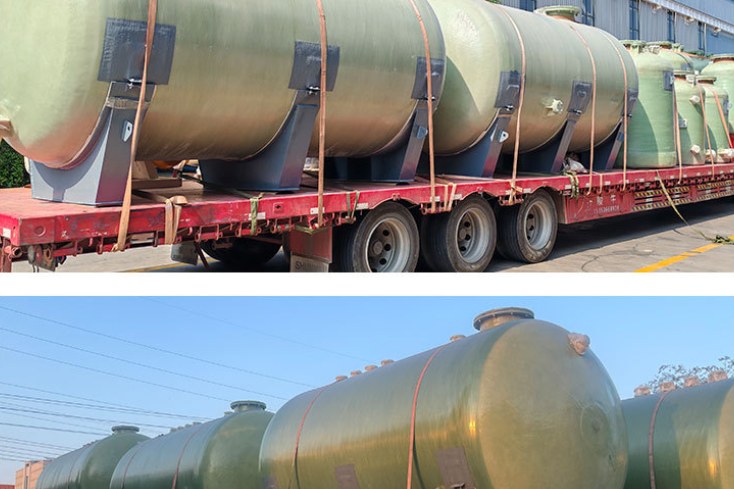
Water storage tanks are bought on first cost and paid for over decades. A steel tank that is a few percent cheaper at purchase can cost more than the FRP alternative in repainting alone by year ten, while a concrete tank's cheap shell can be wiped out by one liner failure and the cost of restoring water quality. Comparing tanks by sticker price is how procurement teams spend the most over a tank's life.
This guide builds a fair 10-year cost comparison between FRP, steel and concrete water tanks, separating first cost from maintenance, installation, water-quality and longevity costs — with realistic assumptions you can adapt to your project.
1. The Three Materials at a Glance
| Property | FRP (GRP) | Steel (coated) | Concrete |
|---|---|---|---|
| Typical first cost | Moderate | Low–moderate (smaller sizes) | Low shell, but liner/coating adds up |
| Corrosion behaviour | None — no coating to fail | Requires coating; coating is the real lifespan item | Neutralises acids; alkalinity leaches early |
| Maintenance cycle | Inspect, clean — no repainting | Repaint every 5–10 years depending on water and climate | Reseal/repair liner and joints periodically |
| Installation time | Days, mechanical joints | Field erection and welding, then coating cure | Weeks; concrete cure ~28 days before water |
| Water quality impact | Inert liner (potable approvals available) | Rust products if coating is damaged | Early pH rise from lime leaching |
2. First Cost Is Only the Opening Bid
For a given capacity, FRP usually sits between coated steel and concrete on purchase price. But the honest comparison starts after installation:
- Steel: the coating protects the tank. Coatings degrade from UV, chlorinated water and handling damage, and repainting a water tank means draining, surface preparation and environmental controls — typically a five-figure event plus downtime.
- Concrete: the structure lasts, but water-side protection (coating, liner or membrane) and joint sealing are recurring items, and early water chemistry needs management.
- FRP: the corrosion barrier is the wall itself — no coating system with a finite life. Cost is inspection and cleaning, not recoating.
3. Installation Cost Differences
- Steel tanks need cranage for panels/sections, skilled erection and welding, and coating cure time before filling.
- Concrete tanks need formwork, reinforcement, cast-in items and a 28-day cure before testing.
- FRP tanks arrive in factory-made sections or complete units, are jointed mechanically and can be commissioned within days — a real saving on site cost and schedule, especially in remote or retrofit locations.
4. A 10-Year Cost Model (Indicative, 100 m³ Ground Tank)
| Cost line | FRP | Coated steel | Concrete + liner |
|---|---|---|---|
| Supply | $$ | $–$$ | $$ |
| Installation / cure | $ (days) | $$ (weeks) | $$$ (weeks + cure) |
| Maintenance (10 yrs) | Inspection + cleaning | 1–2 recoating cycles | Liner/ joint repairs, water treatment |
| Downtime cost | Minimal | Each recoating event | Each repair event |
| 10-year total | Typically lowest | Highest where water is aggressive | Mid, sensitive to liner quality |
Model your own numbers: put realistic recoating intervals and site day-rates in, and FRP's no-recoat advantage usually decides the comparison by year 5–7.
5. Service Life and Water Quality
- FRP tanks commonly exceed 25–30 years in water service with a properly matched liner, and are approved for potable water under standards such as NSF/ANSI 61 where specified.
- Steel lifespan is really the coating's lifespan; corrosion under a damaged coating can perforate a panel within a few seasons.
- Concrete structures last long, but early lime leaching raises pH and hardness in the first fills — an issue for process or aquaculture water, and managed with curing washes or liners.
6. Decision Guide
- Choose FRP for: potable and process water where life-cycle cost matters, aggressive or chlorinated water, fast-track and remote installations, and above-ground tanks in corrosive air (coastal, industrial).
- Choose coated steel for: very large elevated tanks where structural steel framing is already present, and budgets that genuinely cannot stretch to a maintenance-free tank.
- Choose concrete for: very large reservoirs where in-situ construction is acceptable, buried tanks, and projects with long schedules and skilled local concrete crews.
7. Cost-Comparison Mistakes
- Comparing supply prices only — installation, cure time and downtime are real money.
- Ignoring the recoating cycle of steel tanks when the site water is aggressive.
- Assuming concrete needs no water-side protection in potable service.
- Forgetting that a cheaper first cost is often a more expensive tank.
Compare our filament-wound FRP water tanks and horizontal FRP storage tanks for potable and process water; for the wider picture see the full FRP storage tank range and the vertical tank design guide.
Need help selecting FRP products?
Our engineers answer technical questions free of charge.
Ask an Engineer on WhatsApp