
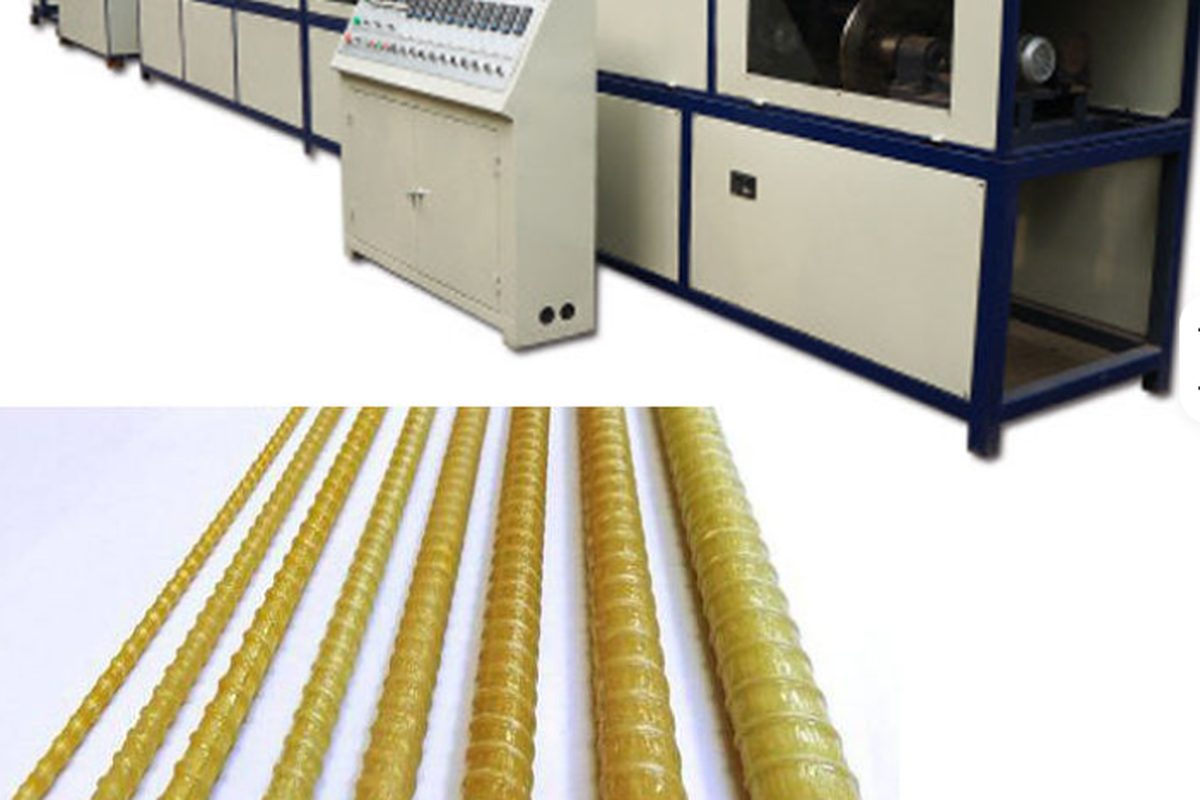
Glass fibre reinforced polymer (GFRP) rebar solves the problem that consumes concrete infrastructure worldwide: steel rusts, expands, and bursts the cover off. In bridge decks exposed to de-icing salts, marine structures, wastewater tanks, tunnel linings and magnetic-sensitive facilities, GFRP cages deliver a corrosion-free design life. What it does not do is behave like steel - and the sooner a design team internalises the differences, the better the structure and the lower the total cost.
1. Material Properties: The Numbers That Change the Design
| Property | Steel Rebar (B500) | GFRP Rebar |
|---|---|---|
| Tensile strength | 500-550 MPa (yield) | 800-1200+ MPa (no yield, rupture) |
| Modulus | 200 GPa | 45-65 GPa |
| Failure mode | Yield then ductile | Linear elastic to rupture |
| Density | 7850 kg/m3 | 1900-2100 kg/m3 |
| Corrosion | Rusts; needs cover | Immune to electrochemical corrosion |
| Transverse strength | High | A fraction of tensile - bending rules differ |
Two consequences dominate. First, no yield: GFRP members are designed with larger safety margins on rupture and rely on concrete compression, which means sections are deeper or more heavily reinforced than steel equivalents. Second, low modulus: deflections and crack widths grow for the same geometry, so serviceability - not strength - usually sizes GFRP members.
2. ACI 440.1R Design Philosophy
ACI 440.1R (Guide for the Design and Construction of Structural Concrete Reinforced with FRP Bars) sets the framework most codes reference. Its key adaptations: strength reduction factors are lower than steel design (rupture is brittle); a tensile strength reduction factor applies to guaranteed ultimate tensile strength accounting for sustained load and environmental effects; creep-rupture limits cap the sustained stress fraction (typically well below 0.3 of ultimate for glass); and serviceability checks - crack width and deflection with the lower modulus - are explicit design steps rather than afterthoughts. The practical translation: expect GFRP designs to carry somewhat more reinforcement at somewhat greater depth than the steel version, and to be governed by deflection in beams and slabs of any length.
3. Serviceability: Deflection and Crack Width
With E of one-third of steel, identical sections deflect roughly three times as much under the same load - the designer recovers serviceability by increasing depth, increasing reinforcement ratio, or both. Crack widths in GFRP members run wider for the same stress; ACI 440 tolerances accept wider cracks than steel design for non-corrosive environments (corrosion is no longer the driver), but water-tightness applications - tanks, basements - still need the concrete design to carry that load: mix design, curing and, where needed, membrane systems. For durability-driven projects the whole point is that cracks in GFRP concrete do not become corrosion pipelines, which changes the risk calculus fundamentally.
4. Shear Reinforcement and Detailing
GFRP stirrups work, with adjustments: their lower transverse strength and bend-strength penalty (bends reduce tensile capacity substantially) mean shear capacity calculations use reduced stirrup stress, and detailing avoids sharp site-made bends. Where shear demand is high, steel fibers, headed studs or proprietary GFRP shear systems designed for the purpose outperform field-bent bars. Hooks and bends are factory-made: standard bend radii exist per bar diameter, and site attempts to straighten or re-bend a factory bend destroy the bar - there is no re-bending GFRP, ever.
5. Site Handling, Cutting and Fixing
| Activity | Rule |
|---|---|
| Lifting bundles | Support at multiple points; long bars sag - do not drag them off trucks |
| Cutting | Angle grinder with diamond or abrasive blade; dust control and eye protection |
| Fixing | Plastic or GFRP chairs and spacers - steel wire ties are replaced by nylon/zip ties |
| Layout | Lighter bars move easily - verify spacing more carefully; no marking-up by feel of weight |
| Electrical works | Cutting near energised equipment is safe - non-conductive and non-magnetic |
| QA on site | Verify bar diameter and type on tags; keep bar certificates with pour records |
The lightness transforms logistics - a crew handles GFRP cages that would need a crane in steel - but the same lightness means fixing crews must be more deliberate about spacing and support, because nothing "settles" into place by its own weight.
6. Where GFRP Pays: Applications and the Cost Case
The economic case is life-cycle, not first-cost: GFRP bars cost more per tonne than steel and deliver less stiffness per bar, so first-cost concrete budgets rise modestly. Against that: no corrosion protection systems, no patch repair cycles, longer service life in chloride environments, lighter transport, faster placement, and for MRI rooms, toll plazas and magnetic facilities, the non-magnetic property is simply a requirement. Bridge decks, marine jetties, tidal splash zones, wastewater structures, chemical plant floors and sensor-embedded smart slabs are the recurring winners.
7. Specification and QA Points That Matter
Specify bars by standard (ASTM D7957 in North America, or the project's named code), by guaranteed tensile modulus and strength, and by bond characteristics - sand-coated surfaces bond like deformed steel, ribbed and bare surfaces differ. Require factory test certificates per batch, bar tags surviving to placement, and pull-out or bond test data for the coating type used. On site, the most common quality miss is ordinary: bars left UV-exposed for months - GFRP tolerates months, not years, of direct sun, so schedule deliveries to the pour, not the season.
Related reading: GFRP rebar materials and QC, FRP vs stainless steel, and our GFRP rebar production line.
Need help selecting FRP products?
Our engineers answer technical questions free of charge.
Ask an Engineer on WhatsApp