
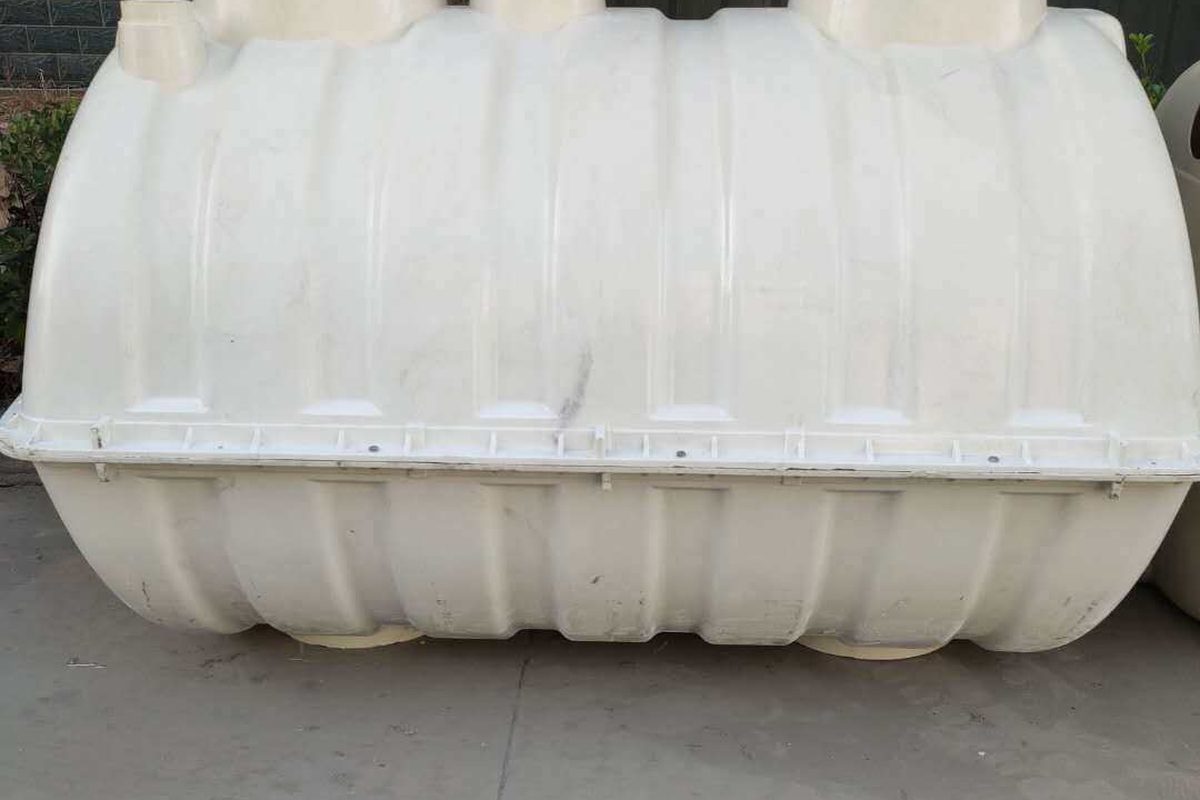
An underground FRP septic or integrated sewage treatment tank is a lightweight vessel in a wet hole in the ground - which means its long-term performance is decided less in the factory than in the excavation. Correctly sized, bedded, ballasted and backfilled, a filament-wound tank serves decades with zero maintenance; rushed, it floats out of the ground in the first rainy season or cracks under a truck it was never rated for. The physics is simple, and so is the discipline.
1. Sizing: Population, Retention and Desludge Interval
Septic tank sizing follows population and retention logic rather than peak flow alone. Working rules used across standards (EN 12566-1 families and local codes):
| Users | Minimum Effective Volume | Notes |
|---|---|---|
| 1-6 persons | 2.5-3.0 m3 | Minimum practical size for desludge interval |
| 7-12 persons | 3.0-4.5 m3 | Add ~150-200 L per extra person beyond 12 |
| 13-25 persons | 5-8 m3 | Consider two-chamber or integrated treatment units |
| Institutional / high-load | Engineered per flow | Restaurants, camps: size on BOD load, not headcount |
Integrated biochemical treatment tanks (multi-chamber, with media or aeration) size on hydraulic and organic load with the supplier's curve - the volume numbers above are septic-tank minimums, not treatment-plant ratings. Undersizing shows up as smell and pump-outs; oversizing mainly costs money - but both extremes are cheaper to fix on the drawing than in the ground.
2. Groundwater and Anti-Flotation Design
An empty FRP tank displaces a lot of water and weighs very little; high groundwater will float it like a boat, bending pipework and tearing inlet tees. The counterweight calculation is straightforward: compare upward buoyant force (tank external volume x groundwater density) against the dead weight of tank plus the weight of soil over it (only the soil wedge directly above) plus any concrete ballast. Safety factor at least 1.1-1.25 with the tank empty and groundwater at surface. In high-water sites the ballast is a concrete slab under or over the tank with straps, or a reinforced concrete surround sized by the supplier's table - guessing here is the single most expensive mistake in the category.
3. Bedding and the Excavation
The hole is dug wider than the tank - typically 300-500 mm clearance each side - and over-deep by 100-150 mm for the bedding layer. Bedding is compacted coarse sand or fine gravel (20 mm maximum size), levelled and screeded; a tank seated on stones or lumps point-loads the base and starts a crack nobody will find until the smell. Excavation sides are shored or sloped per local safety code - this is a confined-space-adjacent work zone, and the collapse statistics justify the formality.
4. Setting, Backfill and Compaction
| Stage | Rule |
|---|---|
| Lowering | Lift by designed lifting points only; no slings around pipework |
| Level check | Level and orient inlet/outlet to design falls before backfill starts |
| Water filling | Fill with water during backfill (typically to outlet level) to stabilise against side loads |
| Backfill layers | Sand/granular in 300 mm lifts, compacted symmetrically side-to-side |
| Heavy plate compactors | Not against the tank wall directly - keep a hand-compacted zone |
| Final cover | Per design; finish to surface level, no ponding over the tank |
Symmetric compaction is the whole game: compact one side hard and the tank walks sideways, loading every connection out of alignment. The water-fill-during-backfill trick is standard and free.
5. Cover Depth and Traffic Loads
Standard tanks are rated for a design cover depth (often 0.5-1.0 m) with a traffic case only if explicitly rated. Under driveways and yards, either deepen cover per the supplier's traffic table, or install a concrete load-distribution slab above the tank - never both shallow and trafficked. Manway extensions raise covers to finished surface; the extension joint must be the supplier's system, sealed, because a leaking cover joint feeds surface water straight into the excavation and undermines the ballast design that assumed native soil.
6. Inlets, Outlets and Ventilation
Inlet tees dip below the surface to calm incoming flow; outlet tees hold back the scum layer - both are part of the tank's function, not optional fittings. Falls on incoming drains (typically 1:40 to 1:80 for small lines) set the tank depth; check the geometry before ordering manway extensions. Ventilation of the sewer side per local code prevents odour and gas buildup; integrated treatment units with blowers need their venting and power provisions planned at excavation time, not after backfill.
7. Commissioning and First-Year Checks
Commission with clean water first: check for movement over 24 hours (a tank that moved during backfill shows it immediately), verify inlet/outlet falls with a light and mirror test, and confirm manways seal. First-year checks: cover drainage after heavy rains, no settlement around manways, pump-out interval matching design, and for treatment units, blower and media performance per supplier schedule. A tank that passes its first winter with covers dry and falls correct is, statistically, done for decades.
Related reading: above-ground vs buried FRP tanks, FRP tank transport and installation, and our SMC molded FRP septic tanks.
Need help selecting FRP products?
Our engineers answer technical questions free of charge.
Ask an Engineer on WhatsApp