
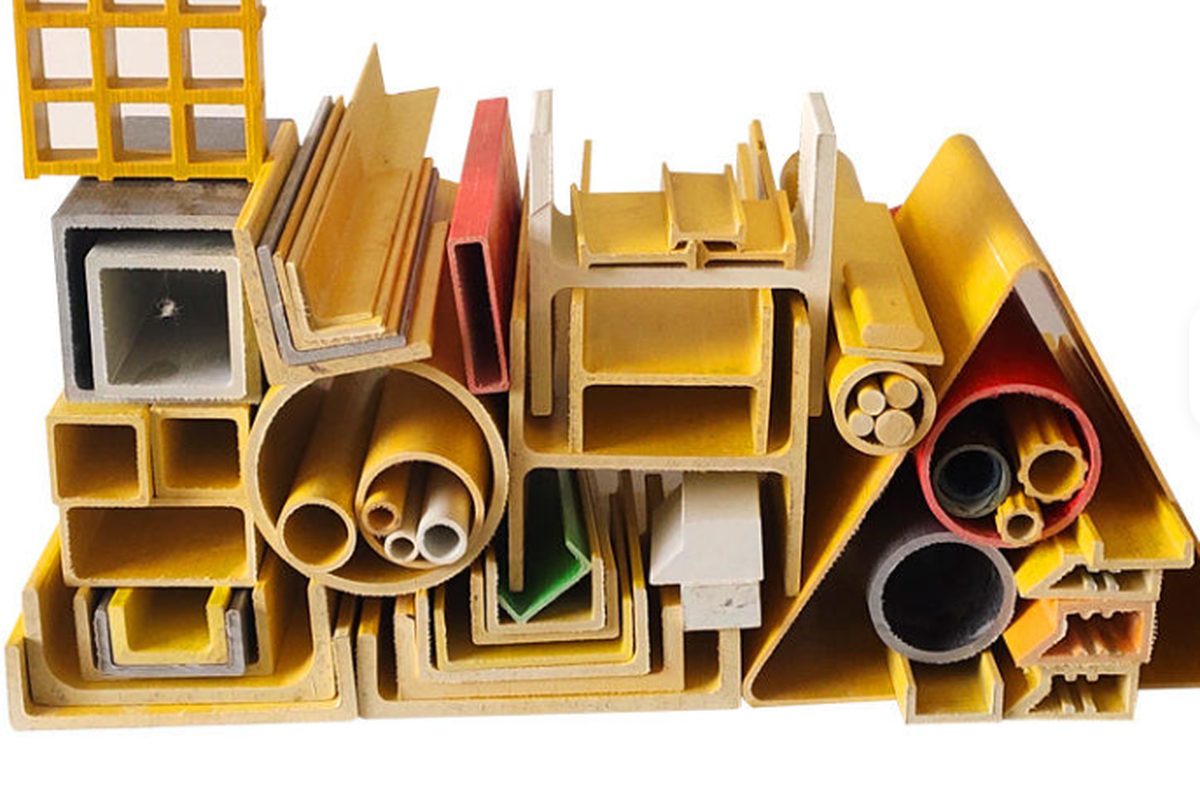
Pultruded FRP profiles are assembled the way steel used to be - bolted - and for good reason: welding is impossible, adhesive-only joints are hard to inspect, and bolted connections tolerate site tolerances, disassembly and future modification. But a bolted FRP connection is not a small steel connection. The material is orthotropic, weak in bearing and through-thickness tension, and unforgiving of the classic steel habits of punching holes tight and torquing hard. Design it with the grain, and a GRP frame will outlast the steel it replaced; design it against the grain, and joints creep loose in months.
1. Failure Modes: What Actually Breaks
Steel connections fail by bolt shear or plate net-section tension. FRP connections add three more modes that usually govern. Bearing failure: the bolt crushes the hole wall - the fibres there are cut and unsupported. Cleavage and pull-out: a bolt near a free edge splits the laminate along its fibre planes. Through-thickness (delamination) failure: clamping or load applied out of plane separates the pultruded plies, which are strong along the fibres and weak between them. Good connection design simply means keeping demand in these weak directions below capacity - through geometry, hole preparation and load path.
2. Bolt Grades, Washers and Isolation
| Component | Recommended | Notes |
|---|---|---|
| Bolt material (corrosive) | 316 stainless steel, or GRP threaded rod | Hot-dip galvanised only for dry interiors |
| Bolt grade | A2-70 / A4-70 typical; A4-80 high load | Match nut grade; never mix alloys |
| Washers | Large-diameter flat washers both faces | Spread clamp load; FRP washers on 316 bolts avoid galvanic couple |
| Isolation | EPDM or nylon sleeve in aggressive service | Breaks steel-to-FRP contact and electrical path |
| Thread lock | Nylon insert nut or medium thread adhesive | Vibration service (walkways near machinery) mandatory |
Bolt diameter typically ranges M10 to M20 for structural work. Oversizing bolts rarely helps: bearing capacity scales with hole diameter but the laminate behind it does not - two smaller bolts usually outperform one large one.
3. Edge Distance, Pitch and Hole Preparation
Keep holes away from free edges: minimum edge distance is 2.0 times bolt diameter (3.0 in the pull direction for cleavage-critical joints), and pitch between bolt centres 4.0 bolt diameters, with row spacing 4.0 as well. Drill holes 1.0-1.5 mm oversize with sharp bits from the cosmetic face, backed by a scrap plate to prevent breakout; deburr and, in corrosive service, seal the hole wall with resin. Punching or reaming under power through unbacked laminate splits plies invisibly - the joint tests fine and fails in service. Where a connection sees reversed load, filled and resin-sealed holes are mandatory.
4. Bearing Capacity and Load Direction
Pultruded material carries load along its fibre direction roughly twice as well as across it. Check the bearing stress (load divided by bolt diameter times plate thickness) against the supplier's allowables in the actual load direction, not the published longitudinal value. Double shear - lap joint clamped between two members - outperforms single lap because the secondary bending that peels single laps apart disappears. When a connection must carry tension across the member (load pulling the laminate apart through the hole), switch to clamped friction-type detailing or add bonded steel inserts, because net-section and cleavage govern quickly.
5. Clamping, Torque and the Creep Question
Clamp load does useful work: it puts the interface in compression so load transfers partly by friction and the joint resists slip and vibration. But FRP creeps, so initial bolt tension relaxes over months under constant load. Practical answers: snug-tight plus a defined quarter-turn rather than steel-style torque-table values; spring washers or nylon inserts to retain preload; and a re-torque at the first maintenance visit (typically 3 months after commissioning) on any connection flagged as critical. Never re-use holes that have elongated - redrill and rebolt to a new position or the joint will keep working loose.
6. Typical Connection Details That Work
| Joint | Detail | Why It Works |
|---|---|---|
| Beam-to-column cleat | Pultruded angle cleats, 2 bolts per leg, web-flange load path | Load enters through profile web, not flange tips |
| Base connection | Base plate with slotted holes, chemical anchor into concrete | Tolerances absorbed in slot; no load into laminate end grain |
| Grating support clip | Clip bolt with oversized washer, snug + quarter turn | Clamps without crushing mesh |
| Handrail post | Through-bolted with tube insert or internal sleeve | Sleeve carries bearing; wall avoids local collapse |
| Braced frame node | Gusset plate bolted to web faces with staggered bolts | Stagger keeps pitch rules satisfiable in narrow webs |
Copies of these details appear in most pultruder design manuals - use them rather than inventing new geometry for standard cases.
7. Site Assembly Practice
Assemble with hand tools or low-speed drivers; impact guns shock-load holes and over-torque washers into the laminate. Drill on solid backing, vacuum dust (it is abrasive and electrically conductive when damp), and seal holes in chemical zones. Check alignment before final tightening - forcing members into place with the bolts sideways preloads the joint in ways the design never saw. On long frames, leave slotted adjustment, tighten from the centre outwards, and verify column plumb before locking base connections.
8. Inspection and Maintenance
Bolted FRP structures want two simple maintenance loops: an annual walkdown checking for hole elongation, washer embedment, gap opening at lap joints and loosened nyloc nuts; and a first-season re-torque of critical connections. Listen as well as look - a creaking platform under load is a joint working, and finding it early is a wrench-tighten, not a repair. Document torque checks on the same register as the tank nozzle inspections so nothing is remembered, everything is scheduled.
Related reading: pultruded FRP profile applications, FRP vs wood vs aluminum structures, and our pultruded FRP angle profiles.
Need help selecting FRP products?
Our engineers answer technical questions free of charge.
Ask an Engineer on WhatsApp