
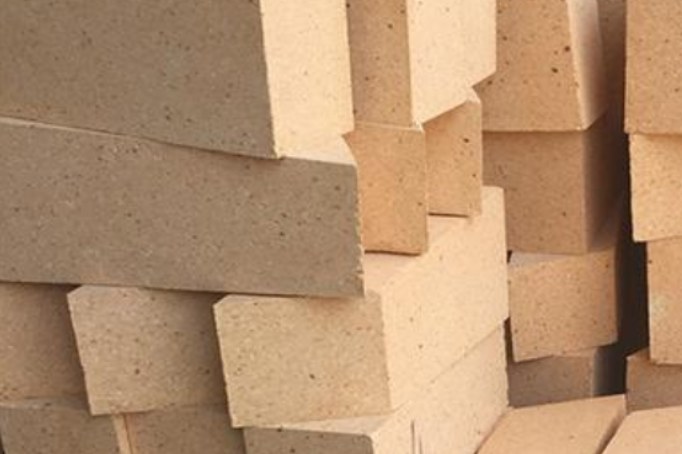
A cement rotary kiln is the most demanding refractory service in mainstream industry: rotating shell, abrasive clinker, alkali and sulfur vapours, and temperatures that swing every time the kiln stops. Brick selection is therefore zone-by-zone engineering, not a single "kiln brick" order. This guide maps the kiln's working zones to high-alumina brick grades, and explains where high alumina wins — and where it should give way to basic bricks.
1. What Alumina Content Buys You
High-alumina bricks (Al2O3 48–90%+) are made from bauxite, calcined alumina and binders, fired to density. Rising alumina content raises refractoriness, hot strength and slag/alkali resistance, at increasing cost. Lower-alumina grades (fireclay-based) bring better thermal shock resistance and lower cost. The specification game is matching that trade-off to each zone's actual duty.
2. The Kiln Zone Map
| Zone | Approx. shell temp | Dominant stresses | Typical choice |
|---|---|---|---|
| Preheating / precalcining | ~250–700°C | Abrasion, alkali cycling | Fireclay / Al2O3 40–55% bricks |
| Calcining zone | ~700–1000°C | Abrasion + alkali attack | High-alumina 55–70% |
| Transition zone | ~1000–1300°C | Thermal shock, shell flexing, coating loss | High-alumina 70–80% or magnesia-spinel |
| Burning (clinkering) zone | ~1300–1450°C+ | Peak temp, clinker melt, coating cycling | Magnesia-spinel / doloma; high-alumina 80–90% as alternative |
| Discharge / nose ring | ~1250–1400°C | Shock, clinker abrasion | High-alumina 80%+ / castable |
3. Transition Zone: Where High-Alumina Earns Its Keep
The transition zone is the classic high-alumina stronghold: temperatures are high but unstable, coating (clinker ring) forms and detaches unpredictably, and the rotating shell flexes. Bricks here need thermal shock resistance plus hot strength — 70–80% alumina bricks with good spalling resistance routinely outlast misapplied premium basic bricks whose coating-dependence fails under transition-zone instability. Match brick to the shell deformation as much as to the temperature.
4. Burning Zone: Know When to Step Aside
In a well-behaved burning zone with stable clinker coating, magnesia-spinel (basic) bricks dominate worldwide because clinker melt chemistry is basic — a basic brick forms stable coating with it. High-alumina 80–90% bricks serve burning zones successfully where coating is unreliable, in smaller kilns, and where alkali chlorides rather than melt attack dominate. The choice is chemistry-led: acid/neutral brick against basic melt erodes by mechanism, not by accident.
5. Alkali, Sulfur and Coating Chemistry
Kiln atmospheres carry alkali salts (K2O, Na2O chlorides/sulfates) that penetrate brick pores, condense in cooler zones and burst spall the hot face — the reason preheating-zone bricks fail "mysteriously". Higher-density, lower-porosity high-alumina grades resist penetration; and where sulfur is high, avoid bricks with free CaO chemistry. Confirm your fuel and raw meal chemistry with the supplier — coal versus alternative fuels changes the attack profile materially.
6. Quality Checks on Delivered Bricks
- Al2O3 content certificate vs order grade; check a sample by XRF if volume justifies
- Apparent porosity and bulk density (porosity predicts alkali penetration)
- Cold crushing strength and refractoriness-under-load (RUL) certificates
- Dimensional tolerances — rotary kiln rings live or die on tight joints
- Thermal shock cycles (water/air quench) for transition-zone grades
7. Installation Notes
Rotary kiln lining is laid in rings with steel plate compensation at key joints; brick joints staggered, shell cleaned, and ring closure done with cutting-plus-plate, never by forcing oversized bricks. Radial joints must stay tight — an open radial joint opens a gas path to the shell. Dry-out and first heat-up schedule follows the supplier's curve, slow through elastic-to-ceramic transition ranges.
8. Specification Checklist
- Zone-by-zone grade table in the order, not one grade "for the kiln"
- Al2O3 %, porosity, CCS, RUL certificates per grade
- Thermal shock data for transition-zone grades
- Dimensional tolerance class and keying brick shapes
- Fuel and raw-meal chemistry disclosed for attack-matching
- Laying plan and dry-out curve supplied
9. Common Mistakes
- One grade for the whole kiln — overpaying cold zones, underperforming hot ones.
- High-alumina against basic melt in an unstable burning zone, then blaming the brick.
- Ignoring alkali chemistry in the preheat train.
- Loose radial joints becoming gas channels to the shell.
- No dry-out schedule after repair — first restart wrecks the new ring.
See our 90% alumina bricks for cement kilns, fireclay bricks for ovens & kilns, mullite insulating bricks and the full refractory & fireproof materials range; related reading: refractory materials selection guide and ceramic fiber forms guide.
Need help selecting FRP products?
Our engineers answer technical questions free of charge.
Ask an Engineer on WhatsApp