
Refractory linings rarely fail because the material was wrong; they fail because the anchoring system was wrong. Anchors carry the lining's weight, restrain it against gas flow and thermal cycling, and position it while it is still plastic or fibrous - and they do all of this while themselves living at a temperature most steels cannot survive. Choosing the anchor is therefore not a hardware decision, it is a lining-design decision.
1. Anchor Alloy Selection by Hot-Face Temperature
The anchor tip lives at the hot-face temperature of the lining at its location, and the alloy must survive it with oxidation margin:
| Service Temperature | Typical Alloy | Application |
|---|---|---|
| Up to 800 C | 304 stainless | Dryers, low-temperature ducts, backup layers |
| 800-1000 C | 310 stainless | General furnace walls, ducts with erosion |
| 1000-1150 C | Alloy 601 / 800HT | Hot-face anchors in cyclic furnaces |
| Above 1150 C | Ceramic (silicon carbide / alumina) anchors | Zones where metal anchors oxidise away |
When in doubt, take the design temperature one zone higher: the cost difference between 304 and 310 is trivial next to the cost of a lining collapse. In sulphurous or chlorinated atmospheres, upgrade further - 304 can disappear in months where chloride attack is active.
2. Anchor Forms for Castable Linings
Castable linings are traditionally anchored with V-clips, Y-anchors and welded studs. V-anchors (folded strip) suit thin linings and general walls; Y-anchors give better grip in thicker, vertical sections; curled-Y variants reduce stress concentration at the tip for cyclic service. Stud-welded anchors speed installation on steel shells but need a qualified welding procedure and a testing routine. All metallic anchors embedded in castable must be coated - with asphalt slip tape or an elastomer sleeve - so that the hot, expanding anchor does not crack the rigid castable around it during heat-up. The coating thickness also defines a deliberate micro-gap that accommodates differential movement between metal and ceramic.
3. Anchor Systems for Ceramic Fibre Module Linings
Fibre module linings anchor differently: the modules are compressed and held by alloy or ceramic hardware at the cold face - stud-and-washer systems, alloy alloy cards, or pre-installed metallic hardware cast into the module. The design goal is that the anchor sits in the cooler, deeper part of the lining while the hot fibres do the insulating. Module systems place the anchor hardware in a controlled factory arrangement, which is precisely why they install faster and fail less randomly than field-anchored blanket. Follow the module manufacturer's hardware kit religiously - substituting a generic stud for the specified alloy clip has collapsed more fibre linings than any material defect.
4. Spacing Rules
| Lining | Typical Spacing | Pattern |
|---|---|---|
| Castable wall, 100-150 mm | 300-400 mm c/c | Staggered; closer at corners and openings |
| Castable roof/arch | 225-300 mm c/c | Gravity demands tighter spacing than walls |
| Castable in erosive ducts | 250 mm c/c maximum | Reduce where gas velocity exceeds 25 m/s |
| Fibre module walls | Per module grid (300 x 300 typical) | Hardware integral to module layout |
| Blanket lining | 300-450 mm c/c | Metallic hanger pins plus washers |
Reduce spacing wherever geometry concentrates load: corners, door frames, burner quarls, thermowell penetrations and every change of lining thickness. Roof anchor spacing is always tighter than walls - a roof lining hangs upside down for its whole life.
5. Expansion Joints and Anchored Sections
Large monolithic areas must be broken into panels with expansion joints every 1.5-2 m in both directions, filled with ceramic fibre paper or rope so that adjacent panels can move without transmitting stress into the anchor array. Same rule at all penetrations (burner quarls, peep doors, thermowells) - a 10 mm fibre rope collar around the penetration prevents the crack that would otherwise radiate from it. In fibre linings, jointing is handled by the module layout itself, which is one of the system's quiet advantages.
6. Welding, Installation and Pull-Testing
Anchors are only as good as their welds. Qualify the stud welding or fillet welding procedure, and pull-test a sample per shift (stud weld guns have torque or pull checks; fillet welds get visual plus dye-pen on critical zones). Anchors must be perpendicular - a leaning anchor seats the lining out of plane. Before casting or module mounting, verify layout on a grid marked out on the shell, not from the fitter's eye. And never weld anchors after the lining behind them has been started: cutting or welding sparks embed in fibre and destroy its insulation value along the scar line.
7. Common Failure Patterns
| Symptom | Root Cause | Prevention |
|---|---|---|
| Bulged panel with cracked face | Anchor coating missing; castable cracked on heat-up | Slip coating discipline, expansion joints |
| Lining dropped in patches | Anchor oxidation to nothing at hot face | Correct alloy for actual metal temperature |
| Corner cracks radiating from openings | No joint collar at penetrations | Fibre rope collars, radiused corner anchors |
| Module rows sagged between hardware | Substituted generic anchors | OEM hardware kits only |
| Stud pull-out during install | Unqualified weld, dirty shell | Weld procedure + pull-test sampling |
8. Inspection and Repair Practice
Inspect anchors at every shutdown that opens the furnace: visual for oxidation necking (a 10 mm bar reduced to 6 mm is on borrowed time), tap testing for hollow panels, and thermography from outside - hot patches on the casing map exactly where lining and anchors have degraded together. Repair discipline: rebuild the anchor array, not just the castable patch; a patch without anchors is a patch scheduled to fall. Keep an anchor register - alloy, spacing, installed date - so the next repair specifies from data rather than memory.
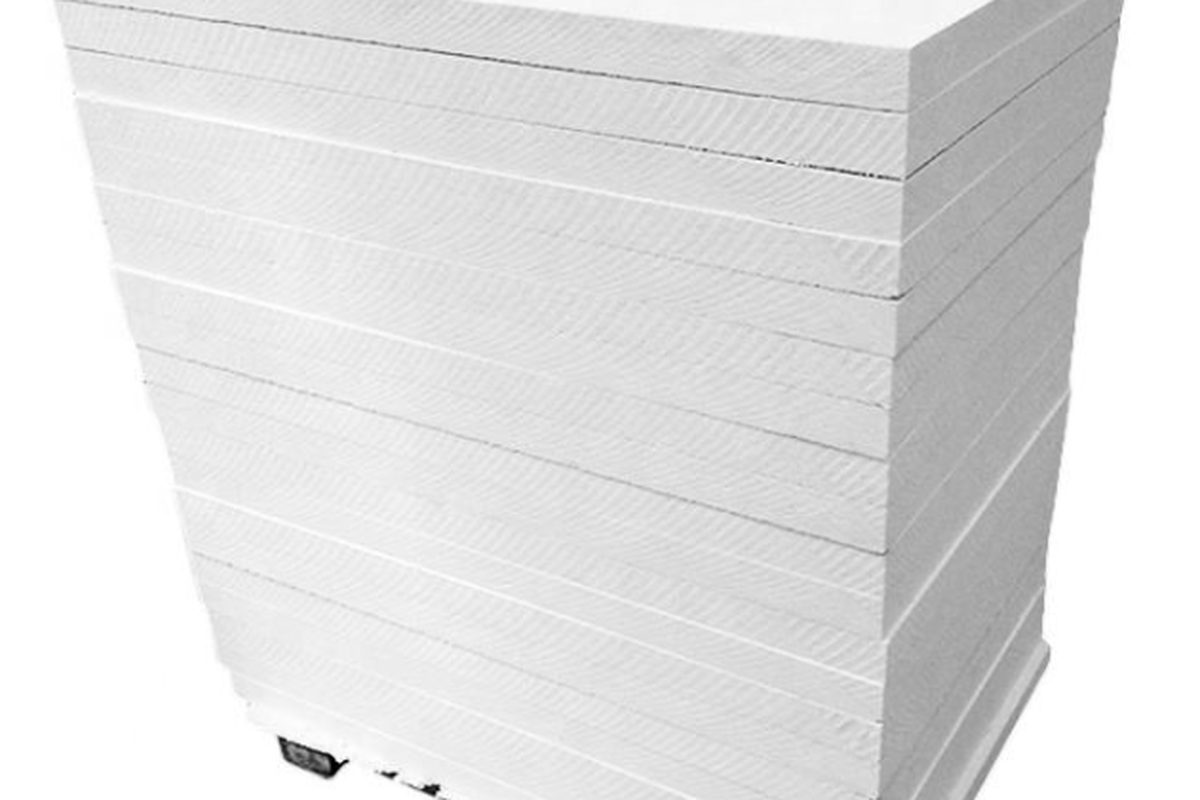
Related reading: ceramic fibre module installation, fibre blanket vs board vs module, and our ceramic fibre board for furnaces.
Need help selecting FRP products?
Our engineers answer technical questions free of charge.
Ask an Engineer on WhatsApp