
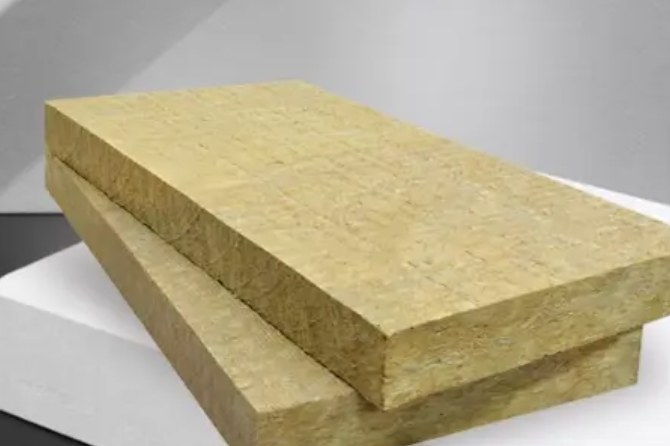
Both rock wool and ceramic fiber are fibrous, lightweight, non-combustible insulations — and on paper they overlap enough that quotations regularly mix them. In service they are separated by one hard boundary: temperature. Choose rock wool where it is magnificent and cheap; cross the line and it shrinks into a Gap-filler of no value. This guide sets the boundary, compares the numbers, and shows where each material belongs.
1. The Two Materials at a Glance
Rock wool (stone wool, basalt melt spun to fibre) is a mineral wool rated for continuous service up to roughly 600–650°C in board form (binder-limited), with excellent acoustic absorption, high density options and strong compressive behaviour. Ceramic fiber (alumino-silicate) extends the same fibrous concept to 1000–1400°C continuous, with lower density and far lower heat storage. The overlap zone between 500 and 700°C is where quotations get confusing.
2. The Temperature Boundary in Numbers
| Property | Rock wool board | Ceramic fiber blanket/board |
|---|---|---|
| Continuous service | ≤ ~600–650°C | 1000–1400°C by grade |
| Density | 60–200 kg/m³ | 64–400 kg/m³ |
| Thermal conductivity @ 200°C | ~0.05–0.07 W/m·K | ~0.06–0.09 W/m·K (blanket) |
| Fire class | A1 non-combustible | A1 non-combustible |
| Relative cost | Low | 3–10× higher |
3. The Deciding Question: Hot-Face Temperature
Everything reduces to the temperature at each layer. Up to ~600°C, rock wool wins decisively on cost with equal insulation value. Above ~650°C, rock wool's organic binder burns out and the fibre structure shrinks — gaps open and the lining under-performs precisely where reliability matters. Ceramic fiber holds structure and low shrinkage through 1100°C+ (1260-class) and beyond with higher-alumina grades. Graded linings use both: ceramic fiber at the hot face, rock wool as cost-efficient backup below 600°C — the correct engineering answer to "which one" is usually "both, layered".
4. Where Each Material Wins
| Application | Winner | Why |
|---|---|---|
| Building & wall fire insulation ≤600°C | Rock wool | Cost, density options, acoustics bonus |
| Boilers, ducts, flues ≤550°C | Rock wool | Proven, cheap, rigid boards |
| Kiln/furnace hot faces ≥800°C | Ceramic fiber | Only survivor at temperature |
| Expansion joints & door seals | Ceramic fiber blanket | Compressibility at temperature |
| Backup layers in graded linings | Rock wool (cold side) | Bulk insulation at low cost |
5. Mechanical and Moisture Behaviour
Rock wool boards carry real compressive and flexural strength (structural grades even carry sandwich-panel facings), and quality boards are water-repellent — convenient on site. Ceramic fiber blanket is fragile in tension and absorbs wetting easily, which matters for outdoor storage and for linings exposed to condensation on the cold side. For walls that also need impact resistance or facing panels, rock wool sandwich panels solve structure and insulation in one product.
6. Installation Notes
Rock wool: butt joints tightly, stagger layers, mechanical fixings or adhesive per system certification — fire-rated assemblies must reproduce the tested system, not a lookalike. Ceramic fiber: compress blanket layers 2–3%, stagger joints through the thickness, protect blanket hot faces from gas erosion (board or module at the front), and follow binder burn-out heat-up curves for boards.
7. Specification Checklist
- Layer-by-layer temperature profile of the lining — the single decisive document
- Rock wool: density, facing, fire-rating system certificate for rated assemblies
- Ceramic fiber: classification grade (1260/1400/1500), density, form
- Moisture exposure assessed for both materials
- Fixing systems matched to shell movement
8. Common Mistakes
- Rock wool specified "up to 1000°C" from melting-point data — binder dies far earlier.
- Ceramic fiber used below 500°C — paying 5× for nothing.
- Single-material linings instead of graded ceramic-fiber/rock-wool stacks.
- Fire-rated rock wool assemblies rebuilt without the certified fixing system.
- Blanket left exposed to erosive gas flow.
See our basalt rock wool boards, 1260°C ceramic fiber blankets and the full refractory & fireproof materials range; related: blanket vs board vs module and the refractory selection guide.
Need help selecting FRP products?
Our engineers answer technical questions free of charge.
Ask an Engineer on WhatsApp